
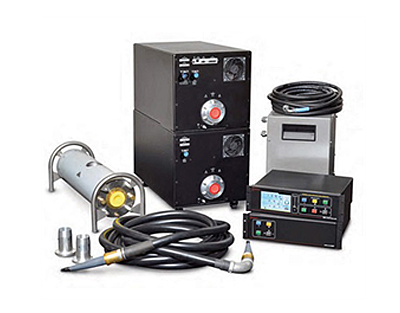
High-voltage X-ray systems are widely used in industrial inspection, medical imaging, security screening, and scientific research. At the core of these systems is the X ray high voltage power supply, which generates and controls the extreme voltages needed to produce X-rays. Without a stable and accurately regulated power source, X-ray systems cannot achieve reliable imaging, consistent output, or safe operation.
Modern X-ray equipment relies on advanced power electronics, where the high-voltage power supplier converts standard electrical input into controlled high-voltage output. This enables precise electron acceleration in X-ray tubes, forming the essential basis of all X-ray generation systems used today.
Understanding the Role of High Voltage in X-Ray Systems
X-ray generation begins when electrons are emitted from a heated cathode and accelerated toward a metal target inside a vacuum tube. This acceleration requires extremely high voltage, which is supplied by the X-ray high-voltage power supply. When these electrons collide with the target, their kinetic energy is converted into X-ray radiation.
The quality of X-rays depends directly on the stability of the voltage supplied. Even small fluctuations can affect image sharpness, penetration depth, and exposure consistency. This is why the high-voltage power supplier must maintain extremely precise control over output voltage and current under all operating conditions.
Structure of X-Ray High Voltage Power Supply Systems
A typical X-ray high-voltage power supply consists of multiple integrated components working together. These include high-frequency inverters, step-up transformers, rectifier circuits, filtering systems, and feedback control units. Each component contributes to the safe and efficient conversion of low-voltage input into high-voltage output.
The high-voltage power supplier also includes monitoring systems that continuously measure output parameters such as voltage stability, current flow, and thermal conditions. These systems ensure that the X-ray tube operates within safe limits, preventing damage and improving system reliability.
Importance of Voltage Stability and Control
Voltage stability is one of the most important performance factors in X-ray technology. The X-ray high-voltage power supply must deliver constant voltage levels even when load conditions change. Any instability can result in poor image quality, inconsistent material penetration, or inaccurate diagnostic results.
In industrial applications, stable voltage ensures that defects in materials can be detected with high precision. In medical imaging, it ensures that diagnostic images are clear and consistent while minimizing patient exposure. The high-voltage power supplier is therefore critical for both performance and safety across all applications.
How High Voltage Power Conversion Works
The process of voltage conversion begins with AC input power, which is first converted into DC and then switched at high frequency. This high-frequency energy is passed through a transformer that steps up the voltage to the required kilovolt range. The X-ray high-voltage power supply then rectifies and filters this output to produce smooth and stable DC high voltage.
This controlled conversion process allows precise regulation of electron energy inside the X-ray tube. The high-voltage power supplier ensures that the output remains stable even during continuous operation or fluctuating power conditions.
Industrial Applications of High Voltage X-Ray Systems
Industries rely heavily on X-ray high-voltage power supply systems for non-destructive testing and quality assurance. These systems are widely used in aerospace, automotive manufacturing, electronics, and material inspection.
Common applications include detecting cracks in metal structures, inspecting weld integrity, measuring material thickness, and analyzing internal defects in components. The precision provided by the high-voltage power supplier ensures that even microscopic flaws can be identified without damaging the product.
Medical Applications of X-Ray Power Systems
In healthcare, the X ray high voltage power supply is used in radiography, CT scanning, dental imaging, and cancer treatment systems. These applications require extremely accurate voltage control to ensure patient safety and diagnostic reliability.
The high-voltage power supplier allows consistent image quality while minimizing radiation dosage. This balance is essential in medical environments where precision and safety are equally important. Stable voltage also improves equipment lifespan and reduces maintenance requirements.
Security and Inspection Systems
Security systems such as airport scanners and cargo inspection units depend on X-ray high-voltage power supply technology to detect hidden objects and threats. These systems must operate quickly and reliably under continuous use.
The high-voltage power supplier ensures stable imaging even when scanning dense or complex materials. This makes it possible to identify prohibited items, structural anomalies, and concealed objects with high accuracy in real time.
Engineering Challenges in Power Supply Design
Designing an efficient X-ray high-voltage power supply involves overcoming several engineering challenges. High voltage insulation, thermal management, electromagnetic interference, and long-term stability are key considerations.
The high voltage power supplier must also be compact enough for integration into modern OEM systems while still delivering high power output. Engineers must carefully balance efficiency, size, and durability to meet industry requirements.
Technological Advancements in High Voltage Systems
Recent advancements have significantly improved the performance of X-ray high-voltage power supply systems. Modern designs use high-frequency switching, digital control systems, and real-time feedback loops for enhanced precision.
These innovations allow the high-voltage power supplier to respond quickly to load changes and maintain extremely stable voltage output. Energy efficiency has also improved, reducing operational costs while increasing reliability and system lifespan.
Integrated X-Ray System Design
Modern X-ray systems are increasingly designed as integrated units that combine the X-ray tube, cooling system, and X-ray high-voltage power supply into a single compact module. This reduces system complexity and improves performance consistency.
Integrated designs offered by manufacturers like VJ X-Ray simplify installation and maintenance while ensuring optimal coordination between all components. The high-voltage power supplier in these systems is finely tuned to match specific application requirements.
Conclusion
The X ray high voltage power supply is the foundation of all modern X-ray systems. It enables precise electron acceleration, stable imaging, and safe operation across industrial, medical, and security applications. The high-voltage power supplier ensures that energy is delivered with accuracy, consistency, and efficiency, making it one of the most critical components in X-ray technology.
If you are looking for advanced and reliable X-ray solutions, VJ X-Ray is a leading global manufacturer specializing in integrated X-ray systems and high-performance X-ray high-voltage power supply technologies. Their expertise spans high-voltage power-supply design, OEM customization, and complete system integration for industrial, medical, and security applications. VJ X-Ray delivers precision-engineered solutions that ensure stability, performance, and long-term reliability in demanding environments.